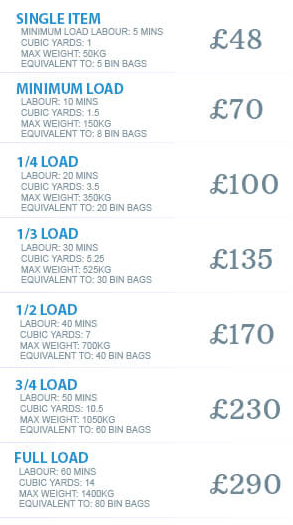
Avoid Hidden Rubbish Removal Charges Ilford What to Know
Posted on 06/06/2026
Avoid Hidden Rubbish Removal Charges Ilford: What to Know
Hidden charges can turn a straightforward clear-out into a frustrating little headache. One minute you've booked a rubbish removal slot in Ilford, and the next you're being asked to pay extra for stairs, access, heavier items, or a van that suddenly "isn't quite big enough". If you're trying to avoid hidden rubbish removal charges in Ilford, the good news is that most of the surprises are preventable once you know what to look for. This guide breaks down the pricing traps, the questions worth asking, and the practical steps that help you keep the final bill fair and predictable.
Whether you're clearing a flat near Ilford High Road, dealing with builder's waste after a refurb, or emptying a loft that has quietly collected three decades of "I'll deal with that later", the same principles apply. Clear pricing matters. So does clarity about what is included. Let's get into the bits people often miss.

Why Avoid Hidden Rubbish Removal Charges Ilford What to Know Matters
Hidden fees are rarely dramatic on their own. That's the thing. It's usually a small charge here, a surcharge there, and then you're staring at a total that feels oddly higher than the original quote. In rubbish removal, that can happen when a provider prices only the easy part of the job and leaves out the real-world details: access, labour, loading time, disposal categories, parking, or awkward items.
In Ilford, where you'll find a mix of terraced homes, purpose-built flats, busy roads, and tighter parking conditions in some streets, accurate quoting matters even more. A collection from a ground-floor property is one thing. A three-storey walk-up with a full fridge, broken wardrobe, and a pile of mixed waste is another. If a quote doesn't reflect the job properly, either the customer ends up paying more later or the collection gets delayed while everyone renegotiates. Not ideal, to be fair.
It also matters because rubbish removal is often time-sensitive. People book because they're moving, renovating, clearing an inherited property, or just trying to get a room back before the weekend. When pricing is unclear, the stress compounds. Good pricing should reduce pressure, not add to it.
Expert summary: A fair rubbish removal quote should explain what's included, what could change the price, and what happens if the load is different from the photos or description. If that isn't clear, ask before you book.
If you're comparing options, it can help to look at the wider service details too. Pages like services overview and pricing and quotes are useful starting points because they help you see how a provider structures the job before you commit.
How Avoid Hidden Rubbish Removal Charges Ilford What to Know Works
The short version: hidden charges happen when the quoted price and the actual collection conditions do not line up. The simplest way to avoid that is to make sure the quote is based on the real job, not a guess. That usually means describing the rubbish accurately, sharing photos, and checking the assumptions behind the estimate.
Most pricing models in rubbish removal are built around one or more of these factors:
- volume of waste
- type of waste, such as household rubbish, furniture, garden waste, or builder's debris
- weight, especially for dense materials
- labour involved in loading
- access and carrying distance
- parking or waiting constraints
- special handling for bulky or awkward items
That doesn't mean a quote is unreliable. It just means the quote has to be built on the right information. If you say "a bit of junk" and the team arrives to a half-full garage packed with tile rubble, broken furniture, and wet garden cuttings, the price may need adjusting. That's not automatically a hidden charge; it can simply be a mismatch between description and reality.
The best providers try to reduce this risk by asking for photos or a short item list in advance. That gives everyone a clearer picture and helps avoid those awkward doorstep conversations where nobody wants to talk money with a wheelie bin in the background.
For jobs involving mixed waste or property clearance, it's worth checking how the provider handles specific service categories. For example, if you're clearing a whole property, house clearance in Ilford is usually priced differently from a simple one-off collection. If the job is more about old chairs, wardrobes, or sofas, a dedicated furniture disposal service may be the better fit.
Key Benefits and Practical Advantages
Getting pricing right does more than save money. It helps the whole removal go more smoothly. Here are the main benefits people notice when they take a careful approach.
1. Fewer surprises on the day
When the quote already reflects stairs, access, and waste type, the arrival process is calmer. No one has to renegotiate while the kettle is on and the front door is open.
2. Easier comparison between providers
A cheap headline price is not the same as a good deal. A clear quote makes it easier to compare like-for-like rather than comparing apples with, well, a sack of old plasterboard.
3. Better planning for households and landlords
If you're moving out, letting a property, or preparing a sale, predictable pricing helps with timing and budgeting. That's particularly helpful if the clear-out is part of a bigger plan, such as a purchase or a move. Readers who are also thinking about local property moves may find the broader context in purchasing homes in Ilford useful.
4. Less stress during busy life moments
Rubbish removal often happens during life transitions. A bereavement, a renovation, a relocation, a garage clear-out before winter. When pricing is transparent, one part of the stress is off the table. Small thing, but it helps.
There's also an operational benefit. If the provider has clear information before arrival, they can choose the right team and vehicle first time, which is better for everyone.
Who This Is For and When It Makes Sense
This approach is useful for almost anyone booking waste clearance in Ilford, but a few groups benefit especially.
- Homeowners clearing out lofts, garages, sheds, or old furniture
- Tenants wanting to avoid deductions or rushed end-of-tenancy problems
- Landlords and letting agents managing fast turnaround clearances
- Families dealing with house clearance after a move or inheritance
- Tradespeople and homeowners clearing builders' waste after work
- Office managers dealing with desks, IT waste, and archive clearances
It makes sense any time the waste is not a simple bin-bag job. If there's bulk, access issues, mixed materials, or a need for disposal sorting, you want pricing that reflects the actual work.
If you are clearing out a workspace, the same logic applies to office clearance in Ilford. If the rubbish is from DIY work, browse the details for builders waste clearance in Ilford because construction waste often has different handling requirements. And if you're tackling the back of the house or the top floor where forgotten things go to hide, loft clearance and garage clearance are both worth considering.
Step-by-Step Guidance
Here's a practical way to keep rubbish removal pricing honest and manageable.
- List what needs removing. Write down item types rather than using vague phrases like "general stuff". Include bulky furniture, bags, rubble, appliances, garden waste, and anything fragile or unusually heavy.
- Take clear photos. A few angled shots usually tell the story better than a long message. Try to capture the whole pile and any access points.
- Explain access clearly. Mention stairs, narrow hallways, rear access, distance from the parking bay, or lift availability. These details matter more than people realise.
- Ask what is included. Confirm labour, loading, disposal, and any possible extras. Be specific. "Is the quote all-in?" is a perfectly fair question.
- Check the waste type. Mixed waste, soil, rubble, plasterboard, mattresses, and electrical items may affect the price or treatment.
- Request the quote in writing. That way you can compare it properly and refer back if needed.
- Confirm what could change the price. A reputable provider should tell you the conditions that may affect the final charge before they arrive.
- Be ready on the day. Separate items if needed, keep access clear, and make sure the team can work efficiently.
If you're not sure whether your job is best described as collection, clearance, or disposal, looking through rubbish clearance in Ilford and waste removal in Ilford can help you match the service to the task. That sounds obvious, but people often skip it and then wonder why the quote feels off.
Expert Tips for Better Results
These are the small things that make a surprisingly big difference.
- Use photos, not just descriptions. Words like "small pile" or "a few items" are too open to interpretation.
- Ask about the minimum charge. Some jobs are priced with a base fee even if the load is light.
- Separate easy-from-hard items. A couple of light bags on the kerb are not the same as a packed loft. Clarity helps.
- Check if the team charges for waiting time. If you need access from a neighbour, caretaker, or shared entrance, mention it early.
- Be honest about heavy materials. Builders' rubble, wet soil, and plaster can change the economics of the job fast.
- Ask whether items are reusable or recyclable. A better sorting process can sometimes reduce waste and improve outcomes.
One small but useful habit: keep a short message template on your phone with the same set of questions each time you request a quote. Saves time and keeps comparisons fair. No need to reinvent the wheel every Saturday morning.
For people who care about disposal routes and the environmental side of the job, recycling and sustainability is worth reading alongside the pricing information. It won't magically make a job cheaper, but it does help you understand what happens after collection.
Common Mistakes to Avoid
Most hidden-charge problems come from a few repeat mistakes.
1. Choosing a quote that is only based on one sentence
If a provider gives you a firm price with almost no questions, that can be convenient. It can also be a warning sign. Jobs vary too much for a truly informed quote to rely on guesswork alone.
2. Forgetting to mention awkward access
Stairs, tight corners, basements, long drives, and controlled parking zones all influence how long a collection takes.
3. Mixing different waste types without saying so
Garden cuttings, broken wardrobes, and renovation debris are not always treated the same way. Tell the provider exactly what is in the load.
4. Not reading the service terms
It sounds dull, I know. But terms and conditions often explain what counts as extra work and how the final price can change. A quick read now avoids grumbling later.
5. Comparing only the headline number
The cheapest quote may exclude things another provider includes. You want the real total, not a shiny number that vanishes the minute the van parks outside.
6. Leaving the load unprepared
If the team has to move furniture out of the way before they can even begin loading, that can affect labour time. A little prep goes a long way.
If you're unsure about the trustworthiness of a provider, take a look at about us and insurance and safety. Those pages often tell you a lot about how carefully a business works, and whether they're thinking beyond the simplest sale.
Tools, Resources and Recommendations
You do not need fancy tools to avoid hidden charges. A handful of simple resources usually does the job.
- Your phone camera for clear photos of the waste and access points
- A notes app to list items, questions, and any promised inclusions
- Floor plans or rough measurements if you're dealing with a larger property clearance
- The service provider's pricing page for a sense of what the quote should cover
- Written messages or emails so you can compare responses properly
Local context can help too. If you're dealing with a home move or a property refresh, reading related Ilford content such as living in Ilford local insights or real estate strategies for buying in Ilford may give you a better sense of how clear-outs fit into bigger decisions. And if you're planning around a very specific local area, the guides on Ilford High Road rubbish removal and Gants Hill rubbish removal offer useful local context.
Law, Compliance, Standards, or Best Practice
Rubbish removal touches on practical compliance issues, so it's worth being sensible here. In the UK, reputable waste carriers should operate in line with relevant waste-handling expectations and dispose of material responsibly. As a customer, the safest approach is to choose a provider that explains how waste is handled, what can be collected, and what may need separate treatment.
You do not need to memorise regulations to protect yourself. A few best-practice checks are usually enough:
- ask whether the provider can handle your waste type
- confirm whether hazardous or specialist items are excluded
- check that the quote reflects the actual volume and access conditions
- keep a copy of your booking details and any written price agreement
- avoid anyone who seems evasive about disposal methods
For building work, the standard is even more important because rubble, plasterboard, soil, and mixed construction waste often need more careful handling. If the collection is tied to renovation, browse the dedicated builders waste clearance information before you book.
Also worth saying: if the provider's terms mention exclusions, surcharges, or restricted access conditions, that is not necessarily a red flag. The problem is not having terms; the problem is burying them. Clear terms are usually a good sign.
Options, Methods, or Comparison Table
Different jobs suit different approaches. Here's a simple comparison that may help.
| Option | Best for | Watch out for | Pricing clarity |
|---|---|---|---|
| Man-and-van style rubbish removal | Quick household clearances, smaller loads, flexible bookings | Access, labour time, and minimum charges | Usually good if photos are provided |
| House clearance service | Full property clear-outs, inherited homes, end-of-tenancy jobs | Volume, sorting, and mixed items | Good when the scope is defined clearly |
| Skip hire | Longer DIY projects, staged loading, on-site flexibility | Permit requirements, driveway space, fill limits | Clear if you know the size and duration needed |
| Specialist waste collection | Garden waste, furniture, office items, or builders' debris | Type-specific exclusions and extra handling | Strong when waste type is identified in advance |
There's no single "best" option for everyone. The right choice depends on what you're clearing, how quickly you need it gone, and how much access the team will have. A tidy ground-floor furniture load? Straightforward. A packed loft with broken storage, old carpet, and three odd-shaped items that refuse to behave? Different story.
If you're comparing service models, skip hire in Ilford and rubbish collection in Ilford are both worth reviewing because they suit different kinds of jobs. One is not automatically cheaper than the other; it depends on labour, time, and how much lifting you want to do yourself.
Case Study or Real-World Example
Here's a realistic example based on a typical Ilford clear-out. A family is preparing a rental property for new tenants. The job includes a broken sofa, two wardrobes, several bin bags, a dismantled bed frame, and a small amount of mixed junk from a cupboard under the stairs. There are also two flights of stairs and limited parking outside, which matters because it affects loading time.
At first glance, the family thinks it is "just a quick collection". But when the items are listed properly, the job becomes more than a simple pick-up. The provider asks for photos, clarifies access, checks whether any items contain mattress springs or electrical parts, and confirms the labour expected. The quote ends up more accurate than the family's first guess, and there are no awkward add-ons on arrival.
What made the difference? Three things:
- the items were described honestly
- the stairs and parking issue were mentioned early
- the customer asked what the quote included before confirming
That sort of process saves stress. It also gives the provider a fair chance to price the job properly. A small amount of preparation really does stop a lot of the friction.
For bigger domestic jobs, it can also help to check specialised pages like house clearance in Ilford or House Clearance Ilford IG1 if your property sits in that part of the area. The more closely the service fits the job, the less likely you are to get caught by mismatched expectations.
Practical Checklist
Use this before you book.
- Have I listed every item or waste type that needs removing?
- Have I taken clear photos from a few angles?
- Have I explained stairs, access, and parking clearly?
- Have I checked whether the quote includes labour and disposal?
- Have I asked what counts as an extra charge?
- Have I confirmed whether the waste is mixed, heavy, or specialist?
- Have I read the terms and conditions?
- Have I compared at least two quotes on the same basis?
- Have I checked the provider's safety and insurance information?
- Have I kept the quote in writing?
And one more, because this gets overlooked a lot: have I made the site easy to access on the day? A clear route to the waste pile can save time, and time is where a lot of minor extras creep in.
Get a free quote today and see how much you can save.
Conclusion
To avoid hidden rubbish removal charges in Ilford, focus on clarity. Describe the waste properly, be honest about access, ask what is included, and insist on a written quote. Simple advice, yes, but it works. Most unpleasant surprises happen because someone assumed the provider understood the job better than they really did.
When you approach the booking carefully, you protect your budget and make the collection smoother for everyone involved. That matters whether you're clearing one bulky item or an entire property. And honestly, there's a real relief in knowing the price will probably stay the price.
If you want a more confident starting point, review the service details, compare pricing properly, and choose the option that fits the job rather than the cheapest headline. A little care now tends to save a lot of faff later.
Sometimes the best home improvement is simply getting the clutter out of the way. Nice and steady. One load at a time.